If you are weighing a condo or townhome in Walnut Creek, you are not alone. Attached homes can offer a more accessible path into a highly desirable East Bay location, but the smartest choice usually comes down to more than the list price. If you understand how ownership, HOA costs, insurance, and financing work in Walnut Creek, you can shop with much more confidence. Let’s dive in.
Walnut Creek attached homes at a glance
Walnut Creek offers a wide range of attached-home options, which is one reason many buyers start here. According to Bay East’s April 2026 attached-home report for Walnut Creek, including Rossmoor, there were 199 active listings, 61 sales, a median sold price of $629,000, about 3.2 months of inventory, and an average of 27 days on market.
That broad market also shows up in current pricing by property type. Redfin shows condos at a median listing price of about $555,000 and townhouses at about $899,000, which means you can find options that fit both entry-level and move-up budgets.
For many buyers, Walnut Creek is not just about the home itself. Location near downtown, BART, and the Interstate 680 corridor can be a major part of the appeal, especially if convenience is high on your list.
Why Walnut Creek location shapes value
If you want easier access to transit and everyday amenities, attached housing can make a lot of sense in Walnut Creek. BART identifies Walnut Creek Station as one of the busiest stations in Contra Costa County, serving about 7,000 riders per day.
The area around the station is also evolving. BART’s transit-village plan calls for about 596 multifamily units and 27,000 square feet of retail near the station, with the first 358 housing units completed in 2023.
That matters because when you buy a condo or townhome here, you may be paying for convenience as much as square footage. For some buyers, being closer to downtown shopping, dining, transit, and major commute routes is the real value driver.
Condo vs. townhome: the label can mislead
This is one of the biggest points buyers miss. In California, a condominium is a legal ownership form, while a townhome is an architectural style, not a legal category.
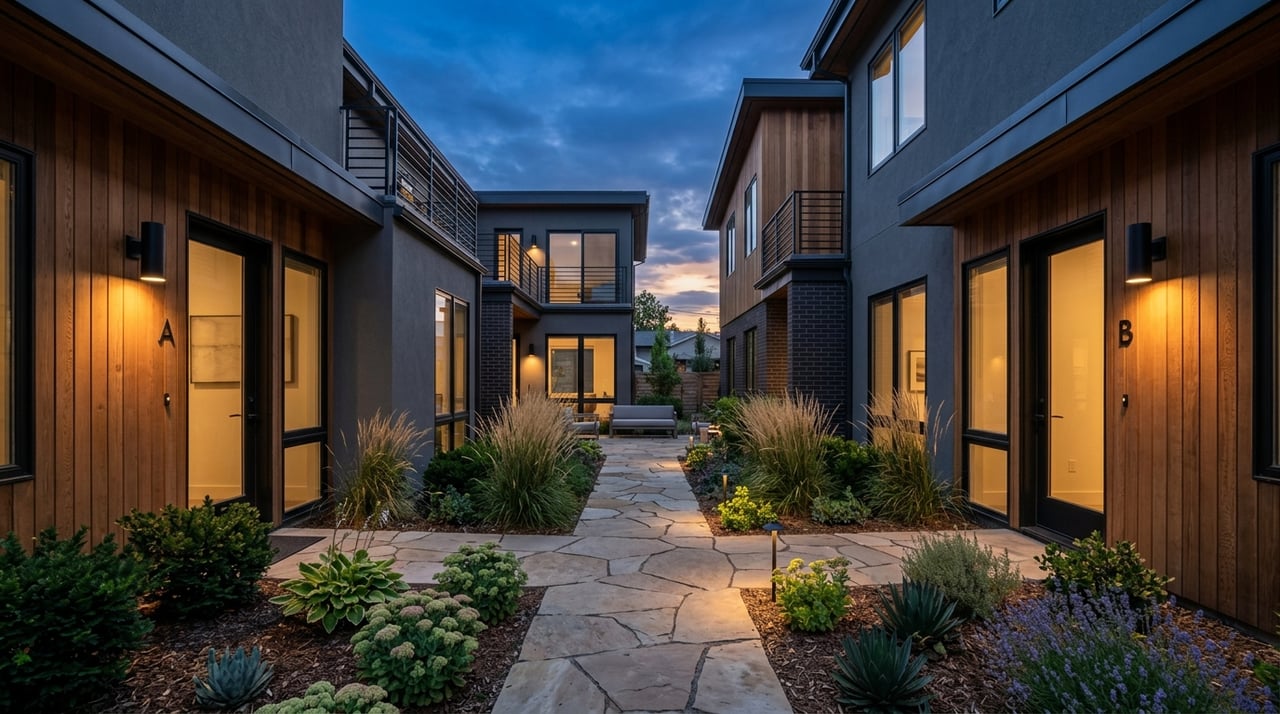
That means a home that looks like a townhome may still legally be a condo. It could also be part of a planned development, which can affect maintenance, parking, common area ownership, and even financing.
In other words, you should not assume what you own based on what the building looks like. The California Department of Real Estate makes clear that details like patios, balconies, driveways, parking spaces, and private yards may be tied to deeded rights, including exclusive-use areas.
What to verify before you fall in love
Before you get too attached to a property, ask these questions:
- What is the actual legal ownership type?
- What parts of the property are deeded to you?
- What areas are common area or exclusive-use common area?
- Who maintains the roof, siding, patios, balconies, and exterior walls?
- What parking rights come with the home?
These answers can shape both your monthly costs and your day-to-day experience as an owner.
HOA dues: what you are really paying for
HOA dues are often one of the first things buyers notice, and in Walnut Creek, they can vary a lot. Current listing examples show dues as low as $13 or $117 in some communities, while other listings show $895 or even $1,700 per month.
That kind of range tells you something important. HOA dues are not random. They often reflect the level of amenities, the amount of shared maintenance, and the association’s operating and reserve responsibilities.
According to the California Department of Real Estate, regular HOA assessments typically help pay for day-to-day operations and reserve funding. Reserve funds may be used for major items like painting, roofing, lighting, carpet, pool equipment, furniture, and paving.
Low dues are not always better
A lower monthly due can look attractive at first. But if dues are too low for the property’s needs, that can raise questions about whether the association is saving enough for future repairs.
On the other hand, a higher due is not automatically a bad sign. It may simply mean the HOA covers more services, amenities, or major building systems.
The key is to understand the scope. You want to know exactly what the HOA pays for and what remains your responsibility.
Maintenance is project-specific
Many buyers are drawn to condos and townhomes because they want less exterior upkeep. That can be true, but it does not mean maintenance disappears.
The California Department of Real Estate notes that maintenance responsibilities vary by project. In some communities, the HOA handles roofs or siding. In others, owners may still be responsible for parts of the exterior.
This is why the marketing label matters less than the governing documents. A home described as low-maintenance may still come with owner obligations for certain exterior items or exclusive-use areas.
Ask for clarity on these items
When reviewing a Walnut Creek condo or townhome, make sure you know who handles:
- Roof maintenance and replacement
- Exterior walls and siding
- Windows and doors
- Balconies, patios, or decks
- Private yards or driveways
- Plumbing or electrical serving only your unit
- Shared amenities like pools, elevators, or recreation spaces
Clear answers here can help you avoid costly surprises later.
Insurance is a bigger factor than many buyers expect
Insurance for attached housing works differently than it does for many detached homes. In general, the condo association insures the building structure and common areas, while your personal condo policy usually covers your belongings, liability, loss of use, and certain interior improvements you are responsible for.
The California Department of Insurance also warns that standard condo coverage does not include earthquake damage. It further notes that an HOA master policy may not cover earthquake damage to common areas or the exterior structure, and owners may face loss-assessment charges after an earthquake.
For Walnut Creek buyers, that means insurance should be part of your budget conversation early. You do not want to focus only on principal, interest, taxes, and HOA dues while overlooking your own policy and any added earthquake-related protection you may want to explore.
Financing a condo or townhome can be different
If you are buying your first home, this part is especially important. In California, buyers should plan for closing costs of roughly 1.5 percent to 5 percent of the purchase price, and conventional loans can start at 3 percent down.
It also helps to get preapproved before you start shopping seriously. California’s Department of Financial Protection and Innovation notes that a preapproval letter is not a guaranteed loan offer, but it can help you set a budget and show sellers that you are likely able to finance the purchase.
With condos and some townhome communities, your loan approval may depend not only on you, but also on the project itself. HUD says FHA condo financing depends on project approval rules tied to insurance, title, legal status, and physical condition. Fannie Mae also identifies issues that can make projects ineligible, such as critical repairs, insufficient master insurance, significant litigation, or hotel-like and short-term-rental operations.
Why project review matters
This is one reason attached-home purchases can require extra diligence. You might qualify personally for a loan, but the community still needs to fit your lender’s guidelines.
That is why it helps to ask early whether the project works with the loan program you plan to use. Doing that upfront can save time, stress, and disappointment.
Documents to review before removing contingencies
If you are under contract on a condo or townhome in Walnut Creek, this is the stage where careful review really pays off. The California Department of Real Estate says buyers should be able to access key HOA documents, and HOA members can inspect books, records, and minutes.
Before removing contingencies, request and review:
- CC&Rs
- Articles and bylaws
- Current HOA budget
- Reserve information
- Recent meeting minutes
- Delinquency disclosures
- Special assessment disclosures
These documents can help you spot hidden costs, pending repairs, rule changes, or financing red flags before you are fully committed.
Smart questions to ask in Walnut Creek
When you compare two attached homes, do not stop at price per square foot. A better comparison looks at the full ownership picture.
Ask these questions as you narrow your options:
- What does the HOA cover right now?
- What stays the owner’s responsibility?
- Have dues changed recently?
- Are any large increases planned?
- Is there a reserve study, and do reserves appear adequate?
- Are there pending repairs, litigation, or special assessments?
- What insurance does the HOA carry, and what are the deductibles?
- Is earthquake coverage included anywhere, or would you need separate protection?
- Are there rental caps, pet rules, parking limits, or HOA approval steps?
- If it is marketed as a townhome, what is the actual legal structure?
These are the kinds of questions that help you buy with your eyes open.
How to decide what fits you best
A condo or townhome in Walnut Creek can be a strong fit if you want location, convenience, and potentially less exterior maintenance than a detached home. It can also be a smart option if you want to balance budget with access to downtown, BART, or major commute routes.
The best choice usually comes down to your priorities. If you value lock-and-leave simplicity, shared amenities, or a more central location, one community may stand out. If you want more space, lower dues, or fewer shared systems, another project may make more sense.
The goal is not just to find a home that looks right. It is to find one where the ownership structure, HOA scope, reserves, insurance, and financing all support your long-term comfort.
If you want a calm, step-by-step plan for buying a condo or townhome in Walnut Creek, Ryan Weible can help you sort through the fine print, ask the right questions, and move forward with confidence.
FAQs
What is the difference between a condo and a townhome in Walnut Creek?
- In California, a condo is a legal ownership type, while a townhome is a building style. A property that looks like a townhome may still legally be a condo, so you need to confirm the actual ownership structure.
How much do HOA dues cost for Walnut Creek condos and townhomes?
- HOA dues vary widely in Walnut Creek. Current listing examples range from very low monthly dues to several hundred or more than $1,000 per month, depending on amenities, maintenance scope, and association costs.
What do HOA fees usually cover in a Walnut Creek attached-home community?
- HOA fees may cover day-to-day operations, common-area maintenance, and reserve funding for items like roofing, painting, paving, lighting, carpet, pool equipment, and other shared expenses. The exact scope depends on the project.
Can you get FHA financing for a Walnut Creek condo?
- Possibly, but the condo project must meet FHA approval requirements related to insurance, title, legal status, and physical condition. Your lender can help confirm whether a specific project qualifies.
What documents should you review before buying a Walnut Creek condo or townhome?
- You should review the CC&Rs, articles, bylaws, current budget, reserve information, recent meeting minutes, and any delinquency or special-assessment disclosures before removing contingencies.
Does condo insurance in California cover earthquake damage?
- Standard condo unit-owner insurance typically does not cover earthquake damage. Depending on the property and HOA coverage, you may want to explore separate earthquake-related protection and understand any possible loss-assessment risk.