If you’re trying to buy your first home in Oakland, one question can shape your whole search: should you start with a condo, a townhome, or a house? In a market where prices move fast and neighborhood values vary widely, that choice is not just about style. It is about budget, monthly costs, upkeep, and how you want to live day to day. This guide will help you compare your starter-home options in Oakland so you can make a more confident decision. Let’s dive in.
Why starter homes look different in Oakland
Oakland is still a high-cost market by most standards, but “starter home” can mean very different things depending on where you look. Recent data shows citywide prices ranging from the high $600,000s to the mid $800,000s depending on the source and how the numbers were measured, while Zillow’s typical home value was $718,621. Homes were also reaching pending status in about 15 days, which tells you the market can still move quickly.
Location also plays a huge role in what feels realistic. Zillow reported neighborhood home values ranging from about $454,849 in Melrose to about $1,471,890 in Fernside. That wide spread means your buying strategy may depend just as much on neighborhood choice as it does on whether you want a condo, townhome, or detached home.
Condos: often the lowest entry point
For many Oakland buyers, condos are the most accessible way to become a homeowner. PropertyShark reported a median condo sale price of $467,000 in Oakland in Q4 2025, which is well below the median for houses. If your main goal is getting into the market with a lower purchase price, condos often rise to the top of the list.
That said, lower purchase price does not always mean lower monthly cost. Many condos come with HOA dues, and those dues can meaningfully affect your budget. When you compare homes, it helps to look at the full monthly picture, not just the list price.
What a condo usually means in California
In California, a condo is defined by ownership rights, not just by how the home looks from the outside. The California Department of Real Estate explains that a condominium typically means you own a separate unit along with an interest in common areas. That is important because features that feel private, like patios, balconies, parking spaces, or even certain outdoor areas, may actually be exclusive-use common areas rather than fully separate property.
This is one reason condo buying requires careful review. What you can use, what you maintain, and what the HOA controls are all tied to the legal structure of the property.
What condo living can look like in Oakland
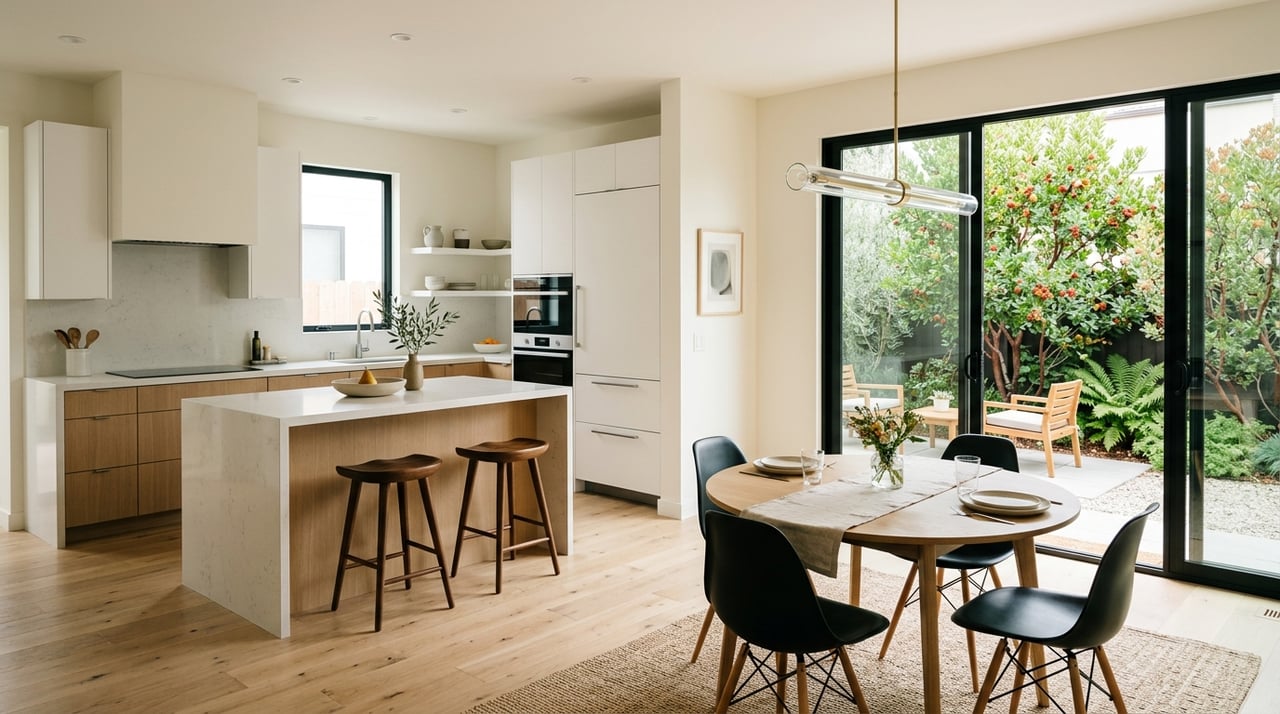
Current Oakland condo listings show the kind of layouts many buyers compare in this price range. A common example is a 2-bedroom, 2-bath condo with roughly 1,000 to 1,100 square feet. Many are designed to make smart use of interior space while reducing the amount of exterior upkeep you need to manage.
For buyers who want a simpler day-to-day routine, that can be a real advantage. You may have less outdoor maintenance to think about, and the overall footprint can feel manageable if you are balancing work, commuting, or just trying to keep your first home purchase from becoming overwhelming.
Townhomes: a middle-ground option
If you want something that feels more house-like but still want shared maintenance in some areas, a townhome may offer the balance you are looking for. In Oakland, townhomes often land between condos and detached homes on price. Recent examples around $510,000 support that middle-ground position.
Townhomes can appeal to buyers who want a little more separation, a private entry, or more functional square footage. In many cases, they provide a good blend of space and convenience.
Why townhomes often feel more like houses
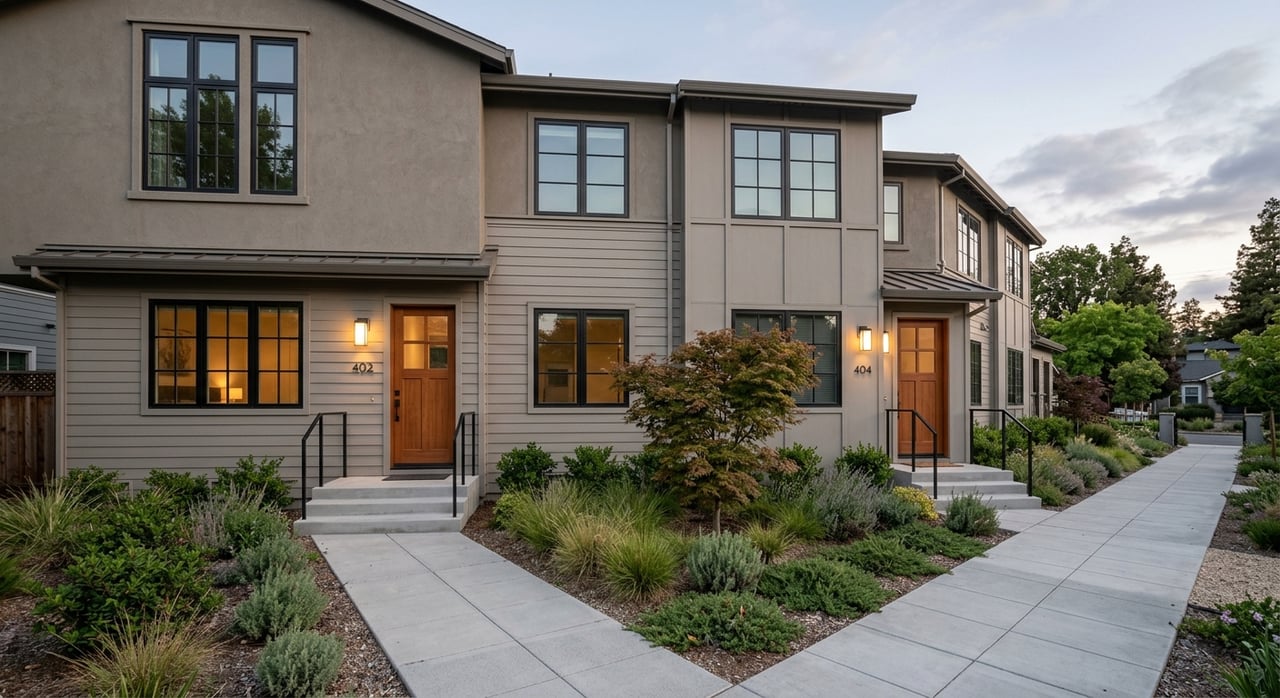
Oakland townhome examples commonly range from about 1,050 to 1,500 square feet, often with 2 to 3 bedrooms and 2.5 baths. Some include in-unit laundry, attached garages, reserved parking, and private entries. Those features can make daily life feel more similar to a detached home, especially if storage and parking matter to you.
Still, the legal structure matters here too. The California Department of Real Estate notes that planned developments and townhome-style communities can include HOA rules and shared responsibilities even when the home looks more like a standalone house. So if a property feels house-like from the curb, do not assume it works like a detached home from an ownership standpoint.
What to watch with townhome maintenance
Townhomes are often marketed as lower-maintenance options, but that does not mean maintenance disappears. The DRE notes that responsibilities can be split between the owner and the HOA. That means you may handle some items directly while the HOA handles others.
Before you buy, it is worth understanding exactly where that line is. Roofs, exterior walls, shared spaces, private patios, and driveways may not all be treated the same way in every community.
Detached houses: more control, more responsibility
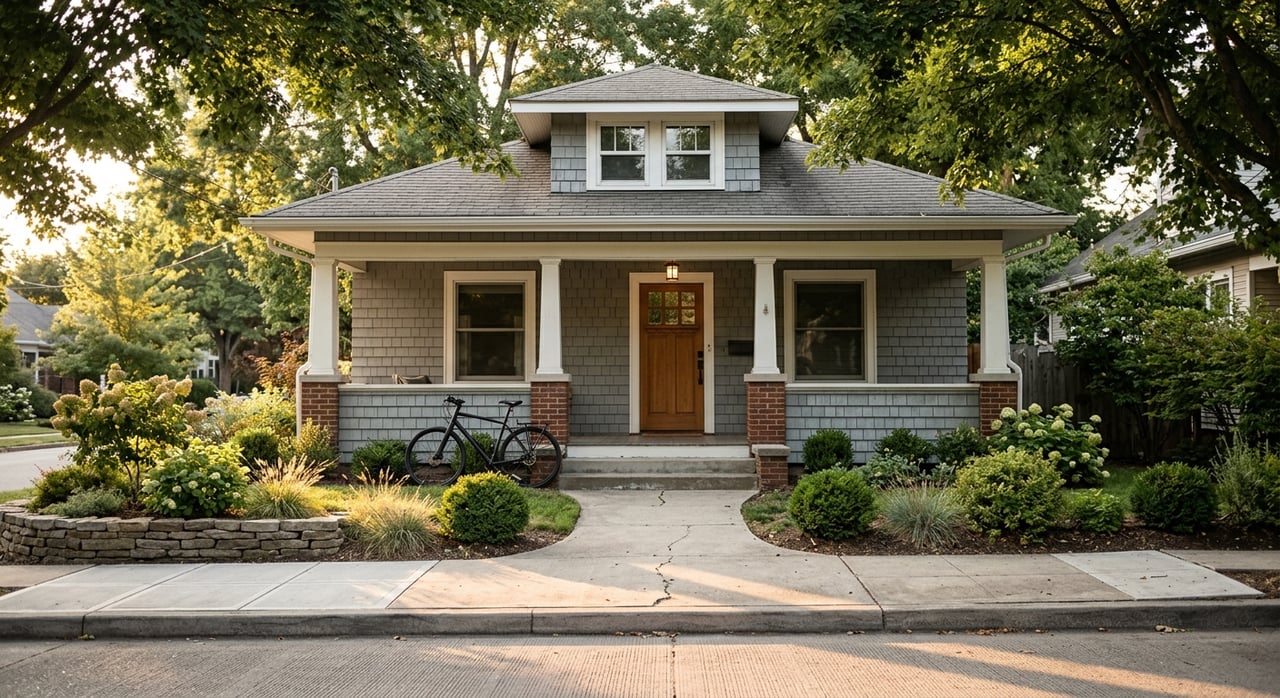
If your dream is a place with no shared walls and more control over the property, a detached house may still be possible in Oakland, especially if you stay flexible on size, age, or location. Detached starter homes in Oakland are often smaller houses or older bungalows rather than larger move-up homes. Zillow examples show homes around 1,000 to 1,200 square feet priced from the low to high $500,000s, even though the citywide median for houses is much higher.
That gap is important because it shows why broad citywide numbers do not tell the full story. There may still be opportunities for first-time buyers who are open to a smaller footprint or a home that needs some updates over time.
What you take on with a detached home
With a detached home, you usually have more control over the property and fewer shared rules. You are also generally responsible for more of the upkeep, including the roof, exterior, yard, and repairs, unless the property is part of a separate HOA-governed development. That can be appealing if you want more independence, but it can also create more ongoing costs and planning.
The California DRE also points out that some homes that look detached may still be part of planned developments with HOA rules. So again, the legal form matters more than appearance alone.
Compare the three starter-home paths
Here is a simple way to think about the tradeoffs:
| Home type | Typical strength | Typical tradeoff |
|---|---|---|
| Condo | Lower entry price | HOA dues and shared rules |
| Townhome | More space and house-like features | Split maintenance and HOA review |
| Detached house | More control and privacy | More upkeep and often higher price |
There is no single best option for every buyer. The right fit depends on how you balance purchase price, monthly cost, maintenance, and the kind of space you want to come home to.
Why HOA review matters so much
If you are looking at condos or townhomes, the HOA review is not a side task. It is a core part of your due diligence. The California Department of Real Estate says HOA assessments are a primary funding source for the community, and those budgets can affect buyer qualification.
The DRE also notes that owners should be able to inspect books, records, and meeting minutes. That matters because the health of the HOA can affect your monthly payment, your future costs, and the overall stability of the community.
Questions worth asking during HOA review
As you compare attached homes, it helps to ask:
- What are the monthly HOA dues?
- What does the HOA maintain, and what are you responsible for?
- Are there reserves for future repairs?
- Have there been recent or planned special assessments?
- Are patios, balconies, parking spaces, or yards deeded or exclusive-use common areas?
- Are there recent meeting minutes that point to major repairs or budget concerns?
These questions can help you avoid focusing only on the asking price. A lower-priced condo with high dues or weak reserves may not feel as affordable once you look at the full picture.
How to decide what fits your budget and lifestyle
When buyers start comparing starter homes in Oakland, it often helps to focus on three things first.
1. Look at full monthly cost
Do not stop at the mortgage estimate. Add HOA dues if they apply, and leave room for maintenance if they do not. A condo may have a lower purchase price, while a detached home may have fewer monthly dues but more repair responsibility.
2. Think about how you want to live
If you want a lock-and-leave lifestyle, a condo may be appealing. If you want a private entry, more square footage, or a garage, a townhome might feel like the better fit. If outdoor space and control matter most, a detached house may be worth the extra upkeep.
3. Stay flexible on location and home type
Because Oakland neighborhood values vary so much, flexibility can create more options. You may find that switching neighborhoods changes what is possible, or that a townhome gives you the features you wanted in a house at a more manageable price point.
A calm way to approach the search
Buying a starter home in Oakland can feel like a lot because there is no one-size-fits-all answer. The good news is that you do not have to solve everything at once. When you understand the tradeoffs between condos, townhomes, and houses, you can narrow your search in a way that fits both your budget and your day-to-day life.
If you want a clear, step-by-step plan for comparing Oakland starter homes, start with a conversation with Ryan Weible. He can help you sort through options, understand the process, and move forward with more confidence.
FAQs
Which starter home type is usually the lowest-cost entry point in Oakland?
- Condos are often the lowest entry-price option in Oakland, though HOA dues can narrow the monthly cost gap.
What makes an Oakland townhome feel more like a house?
- Townhomes often include private entries, attached garages or reserved parking, and more square footage than many condos.
Can an Oakland home that looks like a house still have HOA rules?
- Yes. In California, ownership structure matters more than appearance, so a house-like home can still be part of an HOA-governed development.
Are starter homes only found in one part of Oakland?
- No. Oakland neighborhood values vary widely, so starter-home opportunities can show up in different parts of the city depending on your budget and goals.
Why is HOA review important when buying an Oakland condo or townhome?
- HOA budgets, dues, reserves, and meeting records can affect your monthly costs, financing, and future repair exposure.
What is the main tradeoff with an Oakland detached starter home?
- Detached homes usually offer more control, but they also tend to come with more owner responsibility for repairs, exterior upkeep, and yard maintenance.